Sales operations consulting converts selling from a personal talent into a repeatable system. The work covers pipeline definition, pricing discipline, channel selection and the handoffs between marketing and delivery. Owner-led businesses usually have strong relationships and no mechanism underneath them. Predictability rather than raw volume is the thing a buyer of that work is actually paying for.
Predictability is also what every outside party values. Lenders, acquirers, senior hires and boards all price a business on whether next quarter can be described before it happens. Revenue that arrives without explanation earns none of that credit, however large it becomes.
The material gathered below covers pricing, negotiation, channel and pipeline design. Each topic looks separate from the outside, yet they all fail for the same reason. Nobody decided how revenue is supposed to be created, so it gets created by accident.
A Referral Habit Is Not a Sales Strategy
Referral flow feels like a strategy because revenue arrives on its own. The distinguishing test is causation rather than volume. A strategy produces demand on purpose, at a rate that can be raised or lowered by decision. A referral habit produces demand as a byproduct of past delivery, at a rate nobody controls.
The failure mode is both delayed and unusually severe when it lands. Referral volume reflects the previous era of the business, so it stays healthy through the early part of a downturn. It then collapses well after the window for a useful response has closed. By the time the pipeline visibly thins, the relationship work that would have filled it was needed a quarter earlier.
Naming the problem accurately matters because the remedies point in opposite directions. An owner who recognises that what looks like a sales strategy is really referral dependency starts building the capacity to create demand. An owner who reads the same symptoms as a temporary slowdown hires another closer and waits for the phone.
A functioning sales system shows three properties that are visible from outside. Someone owns each stage, every stage carries an entry and exit definition, and conversion between stages gets measured across time rather than estimated. Referral-led businesses typically hold none of the three. They do not miss them until growth or a shock forces someone to produce a forecast.
Building demand capacity does not mean abandoning what already works. It means adding a second source that responds to effort within a known period. Outbound activity, partnerships and published expertise each behave differently, and the right choice depends on how buyers in that market search. What matters is that the source has an owner and a measured rate.
Undefined Selling Gives Away Price First
Price is where the absence of a system becomes measurable. A seller carrying no differentiated argument has exactly one lever left to pull. Discounting is fast, requires no preparation, and works often enough to become the default move.
The real cost of that habit is positional rather than transactional. A buyer offered a discount before asking for one learns that the list price was fiction. Repeat that pattern across a market and the business gets priced by comparison instead of by capability, which is how competing on price signals that the offer is ordinary.
Service businesses suffer the same damage through inconsistency rather than deliberate discounting. When individual technicians, estimators or account managers set their own numbers, identical work leaves the building at different prices. Customers compare notes, referral sources notice, and margin drains without a single approved concession.
Where every technician prices the same repair differently, the margin quietly absorbs the variance and no report ever shows the loss. Pricing discipline is an operations problem more than a sales problem. It requires a rate structure, a documented exception process, and one person who approves anything outside it. Sellers do not need permission to be confident, they need a number they are not allowed to invent.
Exceptions still need a legitimate place to go inside the structure. A rate card with no approved path for unusual work gets ignored within weeks, which is worse than having none. The exception process should be short, recorded and owned by one person able to refuse. Reviewing those exceptions on a cadence turns pricing policy into something that improves.
Selling Ends Where Negotiating Begins
Most owner-led conversations blur two activities that follow different rules. Selling establishes whether a problem is worth solving and whether this provider should be the one to solve it. Negotiating allocates value after both of those questions have been answered.
Running them together produces the familiar habit of offering concessions to manufacture momentum. Scope expands, timelines compress and payment terms soften, all before the buyer has committed to anything at all. Recognising that the conversation has already moved from selling into negotiating is what allows a seller to stop trading value for enthusiasm.
The discipline involved is procedural rather than psychological or personality-driven. Nothing gets conceded until the buyer has stated that the solution fits and that the decision belongs to them. Concessions after that point become trades, each one exchanged for something specific such as a longer term, a faster deposit or a named reference.
Sales operations work makes the behaviour repeatable by writing it down. A concession list, a defined approval threshold and a required exchange for every item turn individual negotiating instinct into company policy. The policy then survives the departure of the strongest salesperson, which instinct never does.
Timing determines which of the two activities a seller is actually in. Discovery questions belong before any number is discussed, and numbers belong after the buyer has confirmed the problem. Reversing that order turns a qualification conversation into a haggle over a solution nobody has agreed to yet.
The Right Offer in the Wrong Channel Sells Nothing
Product quality and market response are only loosely related. A strong offer placed where its buyer does not shop performs exactly like a weak one. Owners read that silence as a demand problem and respond by improving the product, which makes the original mismatch more expensive.
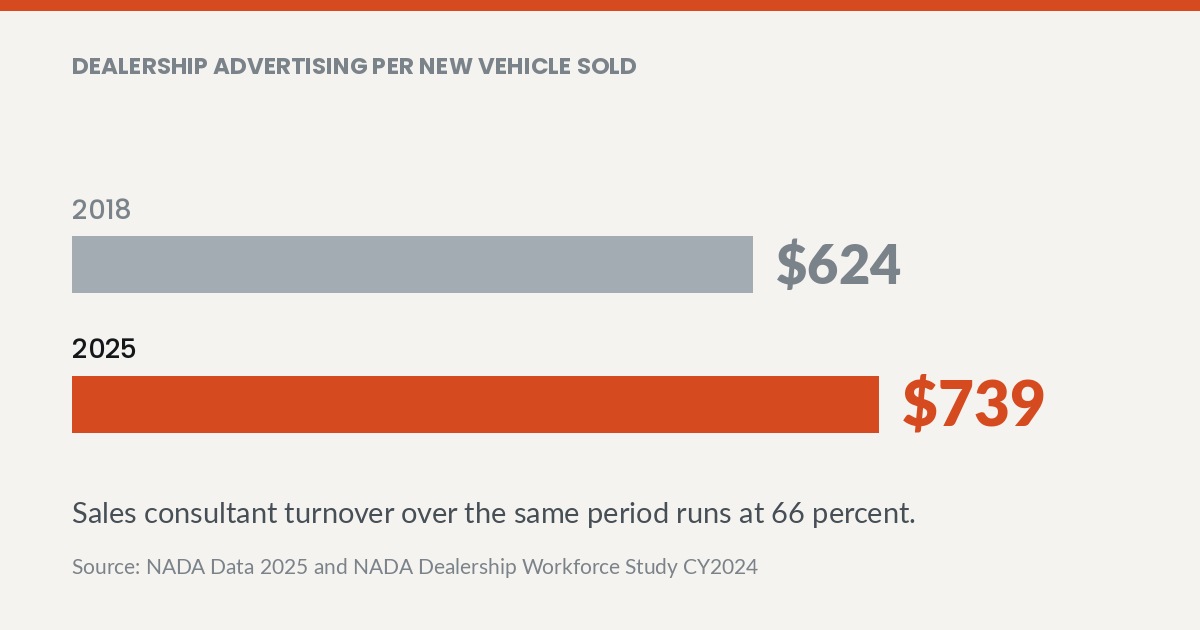
Channel economics are unforgiving and rarely examined directly. Retail automotive shows the pattern at national scale. Dealerships spend $739 on advertising per new vehicle sold, up from $624 in 2018, per NADA Data 2025. The NADA Dealership Workforce Study for CY2024 puts sales consultant turnover at 66 percent.
Rising acquisition cost paired with high seller turnover describes a channel absorbing money faster than it builds capability. The lesson generalises well beyond car retail into any spending channel. When spending climbs while the people who convert that spending keep leaving, the channel is compensating for a structural gap rather than producing growth.
Diagnosis therefore starts with placement rather than promotion. A product that fails in one channel and succeeds in another was never a product problem. That is the argument behind a strong product selling as though it were invisible in the wrong channel. Testing placement costs far less than reworking the offer itself.
Channel sits inside a larger set of decisions that constrain one another. Price, product definition, placement and promotion have to agree, and changing one without the others produces incoherence that buyers can feel. Working through how the elements of the marketing mix limit each other prevents the common error of answering a revenue problem with a single tactic.
What Sales Operations Work Actually Changes
The engagement rarely begins with selling technique. It begins with definitions, because most revenue disputes inside a company are definitional arguments in disguise. Marketing and sales cannot agree on a qualified lead, and sales and delivery cannot agree on what was promised.
Stage definitions come first and do most of the work. A stage needs an entry condition, an exit condition, and a named person accountable for movement through it. Once those exist, conversion becomes observable and forecasting stops being an exercise in optimism.
Pricing governance comes second because it protects everything the pipeline produces. A published rate structure, an approval threshold and a short list of permitted exceptions remove the single largest source of unexplained margin loss. The structure also frees sellers from negotiating with themselves before a buyer says anything.
Channel and mix decisions come third, once the internal machinery can measure what different sources produce. Spending on demand generation before the pipeline can report conversion by source buys noise. Sequence matters more than sophistication in this work.
Reporting closes the loop and usually arrives last. A pipeline that cannot show conversion by source, by seller and by stage cannot support a spending decision. Most teams already collect enough data and simply never structure it usefully. Building that report before the next campaign prevents another quarter of unattributed spending.
None of it removes relationships from the picture. Referrals remain the highest-converting source in most owner-led businesses and should be cultivated deliberately rather than passively. The difference is that a referral becomes one measured channel inside a system, rather than the system itself.
Referral dependence is comfortable because it hides the absence of a mechanism behind real goodwill. The goodwill behind those referrals is genuine and worth protecting. What is missing is the machinery that lets a business be forecast, financed, sold or handed to somebody else. Predictable revenue is worth more than large revenue, and it gets built the way any operation gets built, one owned stage at a time.
Frequently Asked Questions
How do you know whether a business has a sales system or just referrals?
Ask what would happen if the phone stopped ringing for a quarter. A system has levers that can be pulled to create demand on purpose, and someone who owns each one. A referral habit has activity but no controls, so the only available response is waiting. The presence of a forecast that has proved accurate is the clearest single indicator.
What does sales operations consulting actually deliver?
The output is definitions, ownership and measurement rather than motivation. Stage criteria, pricing rules, approval thresholds and reporting by source form the core of the work. Training and tooling follow those decisions instead of replacing them. Most engagements find that existing software can already enforce the rules once the rules exist.
Should a small company stop taking referrals?
No, and doing so would be self-defeating. Referrals typically convert better and cost less than any other source in owner-led businesses. The change is treating referral as one deliberate channel with an owner, a target and a measured contribution. Dependence becomes dangerous only when no other channel exists to absorb a downturn.
Why does discounting damage a business beyond the lost margin?
A discount offered before it is requested teaches the buyer that the published price was negotiable fiction. That lesson travels through referral networks and industry conversations faster than any marketing message. The business then gets evaluated against competitors on price alone, where scale usually wins. Recovering a price position costs far more than holding it did.
How can a company keep pricing consistent across a field team?
Publish a rate structure that covers the common cases and name the person who approves everything else. Require that exceptions be recorded with a reason, then review them on a fixed cadence. Patterns in those exceptions usually reveal a gap in the rate structure rather than misbehaviour. Consistency comes from removing the need to improvise, not from monitoring individuals.
When is the right time to bring in outside sales operations help?
The useful moment arrives when revenue matters more than the founder can personally manage. Common triggers include a forecast that keeps missing, margin that moves without explanation, or a new hire failing to reproduce the founder results. Waiting for a downturn removes the time needed to build demand capacity. Building the system while referrals are healthy costs less and carries far less risk.
No comments:
Post a Comment
Note: Only a member of this blog may post a comment.